Introduction
When people hear the word STEM (Science, Technology, Engineering, and Mathematics), they often think of older students working with computers or complex experiments. But the truth is, STEM learning begins much earlier – even in preschool. At Learning Nest Preschool, we introduce STEM concepts through playful, hands-on experiences that spark curiosity and encourage children to explore how the world works.
1. What STEM Means for Preschoolers
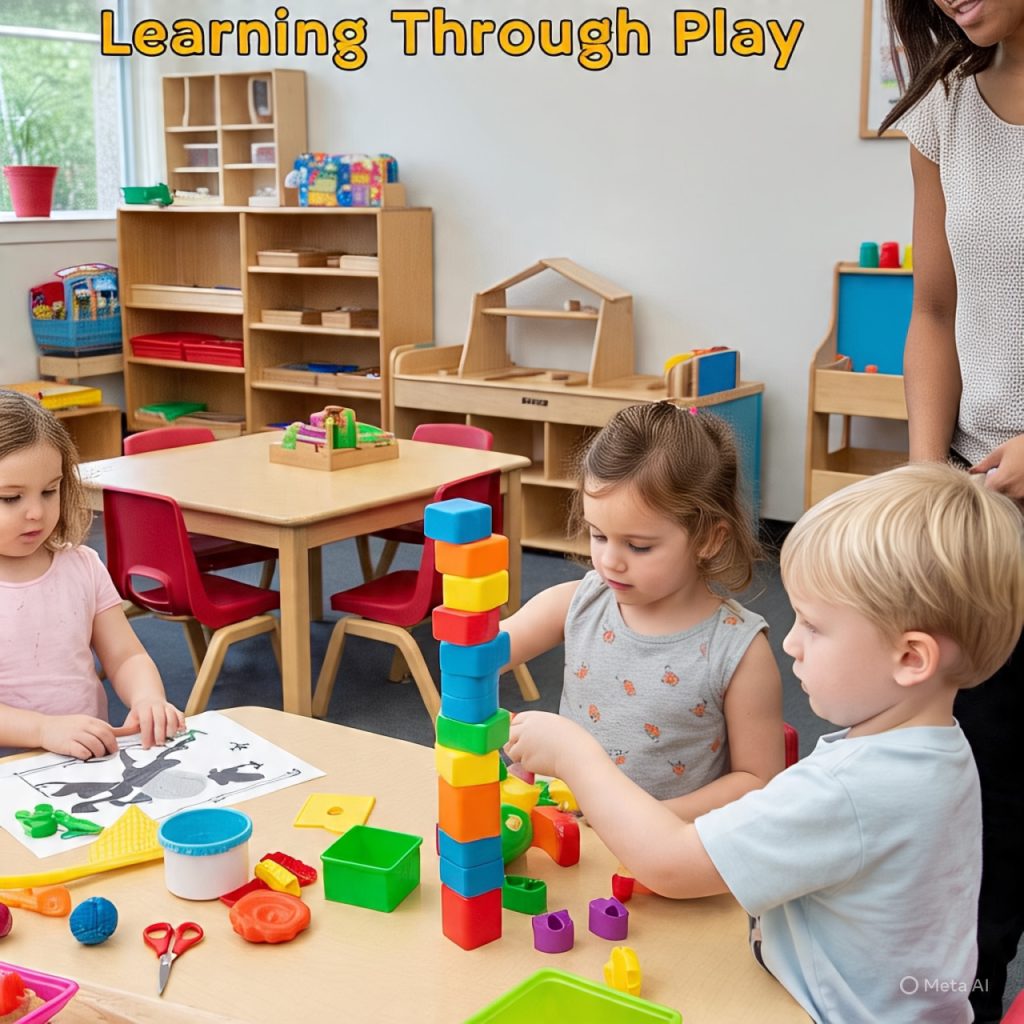
In early childhood, STEM learning is not about textbooks or difficult formulas. Instead, it’s about exploring, experimenting, and discovering. When a child builds a tower with blocks, mixes colors in paint, or watches water flow through a funnel, they are already practicing science and engineering skills.
At Learning Nest Preschool, we create learning environments where children can question, test ideas, and discover solutions through everyday play.
2. Encouraging Curiosity and Exploration
Young children are naturally curious. They ask questions like “Why does this float?” or “What happens if I stack one more block?” These questions are the first steps toward scientific thinking.
Our teachers encourage curiosity by asking open-ended questions such as:
- “What do you think will happen next?”
- “How could we make this stronger?”
These small conversations help children think deeper and become confident problem-solvers.
3. Learning Math Through Play
Math in preschool happens everywhere. Counting toys, sorting shapes, measuring sand, or identifying patterns are all part of early math learning. Through fun activities and games, children begin to understand numbers, sizes, and relationships between objects.
At Learning Nest, math becomes exciting through puzzles, building activities, and interactive learning centers.
4. Developing Engineering and Problem-Solving Skills
Engineering might sound advanced, but preschoolers practice it every day. When children design structures with blocks or figure out how to balance objects, they’re learning about structure, balance, and problem-solving.
These experiences teach children that it’s okay to try, fail, and try again – an important lesson that builds resilience and confidence.
5. Technology as a Learning Tool
In preschool, technology is used in simple and meaningful ways. Interactive learning tools, music, and digital storytelling help children explore ideas while keeping learning engaging and age-appropriate.
At Learning Nest Preschool, technology is carefully balanced with hands-on activities to ensure children develop both creativity and critical thinking skills.
6. Preparing Children for the Future
STEM education helps children develop skills that will benefit them throughout their lives. Curiosity, creativity, and problem-solving are essential abilities for future learning and innovation.
By introducing STEM concepts early, we help children build a strong foundation for academic success while keeping the joy of discovery alive.
Conclusion
STEM learning in preschool isn’t about complicated lessons – it’s about encouraging children to explore, experiment, and ask questions. At Learning Nest Preschool, we nurture curious minds by turning everyday play into exciting learning opportunities.
If you’re searching for a preschool in El Dorado AR that inspires creativity, exploration, and early STEM learning, Learning Nest Preschool is the perfect place for your child to grow, discover, and succeed.